Filters
Question type

Find the function Find the function   satisfying the given conditions.   A)    B)    C)    D)   satisfying the given conditions. Find the function   satisfying the given conditions.   A)    B)    C)    D)


A) Find the function   satisfying the given conditions.   A)    B)    C)    D)
B) Find the function   satisfying the given conditions.   A)    B)    C)    D)
C) Find the function   satisfying the given conditions.   A)    B)    C)    D)
D) Find the function   satisfying the given conditions.   A)    B)    C)    D)

E) A) and C)
F) B) and C)

Correct Answer

verifed

verified

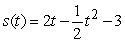
Determine the position function if the velocity function is Determine the position function if the velocity function is   and the initial position is   . A)    B)    C)    D)   and the initial position is Determine the position function if the velocity function is   and the initial position is   . A)    B)    C)    D)   .


A) Determine the position function if the velocity function is   and the initial position is   . A)    B)    C)    D)
B) Determine the position function if the velocity function is   and the initial position is   . A)    B)    C)    D)
C) Determine the position function if the velocity function is   and the initial position is   . A)    B)    C)    D)
D) Determine the position function if the velocity function is   and the initial position is   . A)    B)    C)    D)

E) A) and D)
F) B) and C)

Correct Answer

verifed

verified

Sketch the area corresponding to the integral. Sketch the area corresponding to the integral.

Correct Answer

verifed

verified

Compute the error (the difference between the exact value and the approximation) in the Trapezoidal Rule approximation using Compute the error (the difference between the exact value and the approximation)  in the Trapezoidal Rule approximation using   . Round to 5 decimal places.   A)    B)    C)    D)   . Round to 5 decimal places. Compute the error (the difference between the exact value and the approximation)  in the Trapezoidal Rule approximation using   . Round to 5 decimal places.   A)    B)    C)    D)


A) Compute the error (the difference between the exact value and the approximation)  in the Trapezoidal Rule approximation using   . Round to 5 decimal places.   A)    B)    C)    D)
B) Compute the error (the difference between the exact value and the approximation)  in the Trapezoidal Rule approximation using   . Round to 5 decimal places.   A)    B)    C)    D)
C) Compute the error (the difference between the exact value and the approximation)  in the Trapezoidal Rule approximation using   . Round to 5 decimal places.   A)    B)    C)    D)
D) Compute the error (the difference between the exact value and the approximation)  in the Trapezoidal Rule approximation using   . Round to 5 decimal places.   A)    B)    C)    D)

E) A) and D)
F) B) and C)

Correct Answer

verifed

verified

Use the graph to determine whether Use the graph to determine whether   is positive or negative.   A)  Positive B)  Negative is positive or negative. Use the graph to determine whether   is positive or negative.   A)  Positive B)  Negative


A) Positive
B) Negative

C) A) and B)
D) undefined

Correct Answer

verifed

verified

Find the derivative Find the derivative     A)    B)    C)    D)   Find the derivative     A)    B)    C)    D)


A) Find the derivative     A)    B)    C)    D)
B) Find the derivative     A)    B)    C)    D)
C) Find the derivative     A)    B)    C)    D)
D) Find the derivative     A)    B)    C)    D)

E) A) and B)
F) B) and C)

Correct Answer

verifed

verified

Approximate the area under the curve on the given interval using Approximate the area under the curve on the given interval using   rectangles and right-endpoint evaluation. Round to three decimal places.   on   ,   A)  58.704 B)  70.381 C)  63.000 D)  61.698 rectangles and right-endpoint evaluation. Round to three decimal places. Approximate the area under the curve on the given interval using   rectangles and right-endpoint evaluation. Round to three decimal places.   on   ,   A)  58.704 B)  70.381 C)  63.000 D)  61.698 on Approximate the area under the curve on the given interval using   rectangles and right-endpoint evaluation. Round to three decimal places.   on   ,   A)  58.704 B)  70.381 C)  63.000 D)  61.698 , Approximate the area under the curve on the given interval using   rectangles and right-endpoint evaluation. Round to three decimal places.   on   ,   A)  58.704 B)  70.381 C)  63.000 D)  61.698


A) 58.704
B) 70.381
C) 63.000
D) 61.698

E) C) and D)
F) A) and D)

Correct Answer

verifed

verified

Use the graph to determine whether Use the graph to determine whether   is positive or negative.   A)  Positive B)  Negative is positive or negative. Use the graph to determine whether   is positive or negative.   A)  Positive B)  Negative


A) Positive
B) Negative

C) A) and B)
D) undefined

Correct Answer

verifed

verified

Sketch a graph of a function Sketch a graph of a function   corresponding to the given graph of   .    corresponding to the given graph of Sketch a graph of a function   corresponding to the given graph of   .    . Sketch a graph of a function   corresponding to the given graph of   .    Sketch a graph of a function   corresponding to the given graph of   .

Correct Answer

verifed

verified

Answers may vary. On...

View Answer

Suppose that a car can accelerate from Suppose that a car can accelerate from   mph to   mph in   seconds. Assuming a constant acceleration, find the acceleration (in miles per second squared)  of the car and find the distance traveled by the car during the   seconds. A)  Acceleration =   m/s2<sup>2</sup>; distance =   miles B)  Acceleration =   m/s2<sup>2</sup>; distance =   miles C)  Acceleration =   m/s2<sup>2</sup>; distance =   miles D)  Acceleration =   m/s2<sup>2</sup>; distance =   miles mph to Suppose that a car can accelerate from   mph to   mph in   seconds. Assuming a constant acceleration, find the acceleration (in miles per second squared)  of the car and find the distance traveled by the car during the   seconds. A)  Acceleration =   m/s2<sup>2</sup>; distance =   miles B)  Acceleration =   m/s2<sup>2</sup>; distance =   miles C)  Acceleration =   m/s2<sup>2</sup>; distance =   miles D)  Acceleration =   m/s2<sup>2</sup>; distance =   miles mph in Suppose that a car can accelerate from   mph to   mph in   seconds. Assuming a constant acceleration, find the acceleration (in miles per second squared)  of the car and find the distance traveled by the car during the   seconds. A)  Acceleration =   m/s2<sup>2</sup>; distance =   miles B)  Acceleration =   m/s2<sup>2</sup>; distance =   miles C)  Acceleration =   m/s2<sup>2</sup>; distance =   miles D)  Acceleration =   m/s2<sup>2</sup>; distance =   miles seconds. Assuming a constant acceleration, find the acceleration (in miles per second squared) of the car and find the distance traveled by the car during the Suppose that a car can accelerate from   mph to   mph in   seconds. Assuming a constant acceleration, find the acceleration (in miles per second squared)  of the car and find the distance traveled by the car during the   seconds. A)  Acceleration =   m/s2<sup>2</sup>; distance =   miles B)  Acceleration =   m/s2<sup>2</sup>; distance =   miles C)  Acceleration =   m/s2<sup>2</sup>; distance =   miles D)  Acceleration =   m/s2<sup>2</sup>; distance =   miles seconds.


A) Acceleration = Suppose that a car can accelerate from   mph to   mph in   seconds. Assuming a constant acceleration, find the acceleration (in miles per second squared)  of the car and find the distance traveled by the car during the   seconds. A)  Acceleration =   m/s2<sup>2</sup>; distance =   miles B)  Acceleration =   m/s2<sup>2</sup>; distance =   miles C)  Acceleration =   m/s2<sup>2</sup>; distance =   miles D)  Acceleration =   m/s2<sup>2</sup>; distance =   miles m/s22; distance = Suppose that a car can accelerate from   mph to   mph in   seconds. Assuming a constant acceleration, find the acceleration (in miles per second squared)  of the car and find the distance traveled by the car during the   seconds. A)  Acceleration =   m/s2<sup>2</sup>; distance =   miles B)  Acceleration =   m/s2<sup>2</sup>; distance =   miles C)  Acceleration =   m/s2<sup>2</sup>; distance =   miles D)  Acceleration =   m/s2<sup>2</sup>; distance =   miles miles
B) Acceleration = Suppose that a car can accelerate from   mph to   mph in   seconds. Assuming a constant acceleration, find the acceleration (in miles per second squared)  of the car and find the distance traveled by the car during the   seconds. A)  Acceleration =   m/s2<sup>2</sup>; distance =   miles B)  Acceleration =   m/s2<sup>2</sup>; distance =   miles C)  Acceleration =   m/s2<sup>2</sup>; distance =   miles D)  Acceleration =   m/s2<sup>2</sup>; distance =   miles m/s22; distance = Suppose that a car can accelerate from   mph to   mph in   seconds. Assuming a constant acceleration, find the acceleration (in miles per second squared)  of the car and find the distance traveled by the car during the   seconds. A)  Acceleration =   m/s2<sup>2</sup>; distance =   miles B)  Acceleration =   m/s2<sup>2</sup>; distance =   miles C)  Acceleration =   m/s2<sup>2</sup>; distance =   miles D)  Acceleration =   m/s2<sup>2</sup>; distance =   miles miles
C) Acceleration = Suppose that a car can accelerate from   mph to   mph in   seconds. Assuming a constant acceleration, find the acceleration (in miles per second squared)  of the car and find the distance traveled by the car during the   seconds. A)  Acceleration =   m/s2<sup>2</sup>; distance =   miles B)  Acceleration =   m/s2<sup>2</sup>; distance =   miles C)  Acceleration =   m/s2<sup>2</sup>; distance =   miles D)  Acceleration =   m/s2<sup>2</sup>; distance =   miles m/s22; distance = Suppose that a car can accelerate from   mph to   mph in   seconds. Assuming a constant acceleration, find the acceleration (in miles per second squared)  of the car and find the distance traveled by the car during the   seconds. A)  Acceleration =   m/s2<sup>2</sup>; distance =   miles B)  Acceleration =   m/s2<sup>2</sup>; distance =   miles C)  Acceleration =   m/s2<sup>2</sup>; distance =   miles D)  Acceleration =   m/s2<sup>2</sup>; distance =   miles miles
D) Acceleration = Suppose that a car can accelerate from   mph to   mph in   seconds. Assuming a constant acceleration, find the acceleration (in miles per second squared)  of the car and find the distance traveled by the car during the   seconds. A)  Acceleration =   m/s2<sup>2</sup>; distance =   miles B)  Acceleration =   m/s2<sup>2</sup>; distance =   miles C)  Acceleration =   m/s2<sup>2</sup>; distance =   miles D)  Acceleration =   m/s2<sup>2</sup>; distance =   miles m/s22; distance = Suppose that a car can accelerate from   mph to   mph in   seconds. Assuming a constant acceleration, find the acceleration (in miles per second squared)  of the car and find the distance traveled by the car during the   seconds. A)  Acceleration =   m/s2<sup>2</sup>; distance =   miles B)  Acceleration =   m/s2<sup>2</sup>; distance =   miles C)  Acceleration =   m/s2<sup>2</sup>; distance =   miles D)  Acceleration =   m/s2<sup>2</sup>; distance =   miles miles

E) B) and C)
F) A) and D)

Correct Answer

verifed

verified

Evaluate the integral. Evaluate the integral.   A)    B)    C)    D)


A) Evaluate the integral.   A)    B)    C)    D)
B) Evaluate the integral.   A)    B)    C)    D)
C) Evaluate the integral.   A)    B)    C)    D)
D) Evaluate the integral.   A)    B)    C)    D)

E) B) and C)
F) C) and D)

Correct Answer

verifed

verified

The location The location   of the center of gravity (balance point) of a flat plate bounded by   and the   -axis is given by   and   For the isosceles triangle bounded below by the   -axis and above by the function   (for   ), use symmetry to argue that   and   . Compute   . of the center of gravity (balance point) of a flat plate bounded by The location   of the center of gravity (balance point) of a flat plate bounded by   and the   -axis is given by   and   For the isosceles triangle bounded below by the   -axis and above by the function   (for   ), use symmetry to argue that   and   . Compute   . and the The location   of the center of gravity (balance point) of a flat plate bounded by   and the   -axis is given by   and   For the isosceles triangle bounded below by the   -axis and above by the function   (for   ), use symmetry to argue that   and   . Compute   . -axis is given by The location   of the center of gravity (balance point) of a flat plate bounded by   and the   -axis is given by   and   For the isosceles triangle bounded below by the   -axis and above by the function   (for   ), use symmetry to argue that   and   . Compute   . and The location   of the center of gravity (balance point) of a flat plate bounded by   and the   -axis is given by   and   For the isosceles triangle bounded below by the   -axis and above by the function   (for   ), use symmetry to argue that   and   . Compute   . For the isosceles triangle bounded below by the The location   of the center of gravity (balance point) of a flat plate bounded by   and the   -axis is given by   and   For the isosceles triangle bounded below by the   -axis and above by the function   (for   ), use symmetry to argue that   and   . Compute   . -axis and above by the function The location   of the center of gravity (balance point) of a flat plate bounded by   and the   -axis is given by   and   For the isosceles triangle bounded below by the   -axis and above by the function   (for   ), use symmetry to argue that   and   . Compute   . (for The location   of the center of gravity (balance point) of a flat plate bounded by   and the   -axis is given by   and   For the isosceles triangle bounded below by the   -axis and above by the function   (for   ), use symmetry to argue that   and   . Compute   . ), use symmetry to argue that The location   of the center of gravity (balance point) of a flat plate bounded by   and the   -axis is given by   and   For the isosceles triangle bounded below by the   -axis and above by the function   (for   ), use symmetry to argue that   and   . Compute   . and The location   of the center of gravity (balance point) of a flat plate bounded by   and the   -axis is given by   and   For the isosceles triangle bounded below by the   -axis and above by the function   (for   ), use symmetry to argue that   and   . Compute   . . Compute The location   of the center of gravity (balance point) of a flat plate bounded by   and the   -axis is given by   and   For the isosceles triangle bounded below by the   -axis and above by the function   (for   ), use symmetry to argue that   and   . Compute   . .

Correct Answer

verifed

verified

blured image . blured image , since the integrand blured image is ...

View Answer

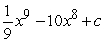
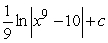
Find the general antiderivative. Find the general antiderivative.   A)    B)    C)    D)


A) Find the general antiderivative.   A)    B)    C)    D)
B) Find the general antiderivative.   A)    B)    C)    D)
C) Find the general antiderivative.   A)    B)    C)    D)
D) Find the general antiderivative.   A)    B)    C)    D)

E) B) and D)
F) B) and C)

Correct Answer

verifed

verified

Find the derivative Find the derivative   .   A)    B)    C)    D)   . Find the derivative   .   A)    B)    C)    D)


A) Find the derivative   .   A)    B)    C)    D)
B) Find the derivative   .   A)    B)    C)    D)
C) Find the derivative   .   A)    B)    C)    D)
D) Find the derivative   .   A)    B)    C)    D)

E) All of the above
F) A) and B)

Correct Answer

verifed

verified

Find the area of the region bounded by Find the area of the region bounded by   ,   , the x-axis, and the y-axis. A)    B)    C)    D)   , Find the area of the region bounded by   ,   , the x-axis, and the y-axis. A)    B)    C)    D)   , the x-axis, and the y-axis.


A) Find the area of the region bounded by   ,   , the x-axis, and the y-axis. A)    B)    C)    D)
B) Find the area of the region bounded by   ,   , the x-axis, and the y-axis. A)    B)    C)    D)
C) Find the area of the region bounded by   ,   , the x-axis, and the y-axis. A)    B)    C)    D)
D) Find the area of the region bounded by   ,   , the x-axis, and the y-axis. A)    B)    C)    D)

E) A) and B)
F) A) and C)

Correct Answer

verifed

verified

Suppose that a runner has velocity Suppose that a runner has velocity   mph for   minutes, velocity   mph for   minutes, velocity   mph for   minutes, and velocity   mph for   minutes. Find the distance run. Round to two decimal places. A)    miles B)    miles C)    miles D)    miles mph for Suppose that a runner has velocity   mph for   minutes, velocity   mph for   minutes, velocity   mph for   minutes, and velocity   mph for   minutes. Find the distance run. Round to two decimal places. A)    miles B)    miles C)    miles D)    miles minutes, velocity Suppose that a runner has velocity   mph for   minutes, velocity   mph for   minutes, velocity   mph for   minutes, and velocity   mph for   minutes. Find the distance run. Round to two decimal places. A)    miles B)    miles C)    miles D)    miles mph for Suppose that a runner has velocity   mph for   minutes, velocity   mph for   minutes, velocity   mph for   minutes, and velocity   mph for   minutes. Find the distance run. Round to two decimal places. A)    miles B)    miles C)    miles D)    miles minutes, velocity Suppose that a runner has velocity   mph for   minutes, velocity   mph for   minutes, velocity   mph for   minutes, and velocity   mph for   minutes. Find the distance run. Round to two decimal places. A)    miles B)    miles C)    miles D)    miles mph for Suppose that a runner has velocity   mph for   minutes, velocity   mph for   minutes, velocity   mph for   minutes, and velocity   mph for   minutes. Find the distance run. Round to two decimal places. A)    miles B)    miles C)    miles D)    miles minutes, and velocity Suppose that a runner has velocity   mph for   minutes, velocity   mph for   minutes, velocity   mph for   minutes, and velocity   mph for   minutes. Find the distance run. Round to two decimal places. A)    miles B)    miles C)    miles D)    miles mph for Suppose that a runner has velocity   mph for   minutes, velocity   mph for   minutes, velocity   mph for   minutes, and velocity   mph for   minutes. Find the distance run. Round to two decimal places. A)    miles B)    miles C)    miles D)    miles minutes. Find the distance run. Round to two decimal places.


A) Suppose that a runner has velocity   mph for   minutes, velocity   mph for   minutes, velocity   mph for   minutes, and velocity   mph for   minutes. Find the distance run. Round to two decimal places. A)    miles B)    miles C)    miles D)    miles miles
B) Suppose that a runner has velocity   mph for   minutes, velocity   mph for   minutes, velocity   mph for   minutes, and velocity   mph for   minutes. Find the distance run. Round to two decimal places. A)    miles B)    miles C)    miles D)    miles miles
C) Suppose that a runner has velocity   mph for   minutes, velocity   mph for   minutes, velocity   mph for   minutes, and velocity   mph for   minutes. Find the distance run. Round to two decimal places. A)    miles B)    miles C)    miles D)    miles miles
D) Suppose that a runner has velocity   mph for   minutes, velocity   mph for   minutes, velocity   mph for   minutes, and velocity   mph for   minutes. Find the distance run. Round to two decimal places. A)    miles B)    miles C)    miles D)    miles miles

E) C) and D)
F) B) and D)

Correct Answer

verifed

verified

Find the area between Find the area between   and the x-axis for   A)  4 B)  8 C)    D)   and the x-axis for Find the area between   and the x-axis for   A)  4 B)  8 C)    D)


A) 4
B) 8
C) Find the area between   and the x-axis for   A)  4 B)  8 C)    D)
D) Find the area between   and the x-axis for   A)  4 B)  8 C)    D)

E) A) and B)
F) A) and C)

Correct Answer

verifed

verified

Suppose that a car can come to rest from Suppose that a car can come to rest from   mph in   seconds. Assuming a constant (negative)  acceleration, find the acceleration (in miles per second squared)  of the car and find the distance traveled by the car during the   seconds (i.e., the stopping distance) . A)  Acceleration =   m/s<sup>2</sup>; distance =   miles B)  Acceleration =   m/s<sup>2</sup>; distance =   miles C)  Acceleration =   m/s<sup>2</sup>; distance =   miles D)  Acceleration =   m/s<sup>2</sup>; distance =   miles mph in Suppose that a car can come to rest from   mph in   seconds. Assuming a constant (negative)  acceleration, find the acceleration (in miles per second squared)  of the car and find the distance traveled by the car during the   seconds (i.e., the stopping distance) . A)  Acceleration =   m/s<sup>2</sup>; distance =   miles B)  Acceleration =   m/s<sup>2</sup>; distance =   miles C)  Acceleration =   m/s<sup>2</sup>; distance =   miles D)  Acceleration =   m/s<sup>2</sup>; distance =   miles seconds. Assuming a constant (negative) acceleration, find the acceleration (in miles per second squared) of the car and find the distance traveled by the car during the Suppose that a car can come to rest from   mph in   seconds. Assuming a constant (negative)  acceleration, find the acceleration (in miles per second squared)  of the car and find the distance traveled by the car during the   seconds (i.e., the stopping distance) . A)  Acceleration =   m/s<sup>2</sup>; distance =   miles B)  Acceleration =   m/s<sup>2</sup>; distance =   miles C)  Acceleration =   m/s<sup>2</sup>; distance =   miles D)  Acceleration =   m/s<sup>2</sup>; distance =   miles seconds (i.e., the stopping distance) .


A) Acceleration = Suppose that a car can come to rest from   mph in   seconds. Assuming a constant (negative)  acceleration, find the acceleration (in miles per second squared)  of the car and find the distance traveled by the car during the   seconds (i.e., the stopping distance) . A)  Acceleration =   m/s<sup>2</sup>; distance =   miles B)  Acceleration =   m/s<sup>2</sup>; distance =   miles C)  Acceleration =   m/s<sup>2</sup>; distance =   miles D)  Acceleration =   m/s<sup>2</sup>; distance =   miles m/s2; distance = Suppose that a car can come to rest from   mph in   seconds. Assuming a constant (negative)  acceleration, find the acceleration (in miles per second squared)  of the car and find the distance traveled by the car during the   seconds (i.e., the stopping distance) . A)  Acceleration =   m/s<sup>2</sup>; distance =   miles B)  Acceleration =   m/s<sup>2</sup>; distance =   miles C)  Acceleration =   m/s<sup>2</sup>; distance =   miles D)  Acceleration =   m/s<sup>2</sup>; distance =   miles miles
B) Acceleration = Suppose that a car can come to rest from   mph in   seconds. Assuming a constant (negative)  acceleration, find the acceleration (in miles per second squared)  of the car and find the distance traveled by the car during the   seconds (i.e., the stopping distance) . A)  Acceleration =   m/s<sup>2</sup>; distance =   miles B)  Acceleration =   m/s<sup>2</sup>; distance =   miles C)  Acceleration =   m/s<sup>2</sup>; distance =   miles D)  Acceleration =   m/s<sup>2</sup>; distance =   miles m/s2; distance = Suppose that a car can come to rest from   mph in   seconds. Assuming a constant (negative)  acceleration, find the acceleration (in miles per second squared)  of the car and find the distance traveled by the car during the   seconds (i.e., the stopping distance) . A)  Acceleration =   m/s<sup>2</sup>; distance =   miles B)  Acceleration =   m/s<sup>2</sup>; distance =   miles C)  Acceleration =   m/s<sup>2</sup>; distance =   miles D)  Acceleration =   m/s<sup>2</sup>; distance =   miles miles
C) Acceleration = Suppose that a car can come to rest from   mph in   seconds. Assuming a constant (negative)  acceleration, find the acceleration (in miles per second squared)  of the car and find the distance traveled by the car during the   seconds (i.e., the stopping distance) . A)  Acceleration =   m/s<sup>2</sup>; distance =   miles B)  Acceleration =   m/s<sup>2</sup>; distance =   miles C)  Acceleration =   m/s<sup>2</sup>; distance =   miles D)  Acceleration =   m/s<sup>2</sup>; distance =   miles m/s2; distance = Suppose that a car can come to rest from   mph in   seconds. Assuming a constant (negative)  acceleration, find the acceleration (in miles per second squared)  of the car and find the distance traveled by the car during the   seconds (i.e., the stopping distance) . A)  Acceleration =   m/s<sup>2</sup>; distance =   miles B)  Acceleration =   m/s<sup>2</sup>; distance =   miles C)  Acceleration =   m/s<sup>2</sup>; distance =   miles D)  Acceleration =   m/s<sup>2</sup>; distance =   miles miles
D) Acceleration = Suppose that a car can come to rest from   mph in   seconds. Assuming a constant (negative)  acceleration, find the acceleration (in miles per second squared)  of the car and find the distance traveled by the car during the   seconds (i.e., the stopping distance) . A)  Acceleration =   m/s<sup>2</sup>; distance =   miles B)  Acceleration =   m/s<sup>2</sup>; distance =   miles C)  Acceleration =   m/s<sup>2</sup>; distance =   miles D)  Acceleration =   m/s<sup>2</sup>; distance =   miles m/s2; distance = Suppose that a car can come to rest from   mph in   seconds. Assuming a constant (negative)  acceleration, find the acceleration (in miles per second squared)  of the car and find the distance traveled by the car during the   seconds (i.e., the stopping distance) . A)  Acceleration =   m/s<sup>2</sup>; distance =   miles B)  Acceleration =   m/s<sup>2</sup>; distance =   miles C)  Acceleration =   m/s<sup>2</sup>; distance =   miles D)  Acceleration =   m/s<sup>2</sup>; distance =   miles miles

E) A) and C)
F) A) and B)

Correct Answer

verifed

verified

Approximate the area under the curve on the given interval using Approximate the area under the curve on the given interval using   rectangles and midpoint evaluation. Round to three decimal places.   on   ,   A)  1.000 B)  0.020 C)  0.750 D)  0.667 rectangles and midpoint evaluation. Round to three decimal places. Approximate the area under the curve on the given interval using   rectangles and midpoint evaluation. Round to three decimal places.   on   ,   A)  1.000 B)  0.020 C)  0.750 D)  0.667 on Approximate the area under the curve on the given interval using   rectangles and midpoint evaluation. Round to three decimal places.   on   ,   A)  1.000 B)  0.020 C)  0.750 D)  0.667 , Approximate the area under the curve on the given interval using   rectangles and midpoint evaluation. Round to three decimal places.   on   ,   A)  1.000 B)  0.020 C)  0.750 D)  0.667


A) 1.000
B) 0.020
C) 0.750
D) 0.667

E) A) and B)
F) A) and C)

Correct Answer

verifed

verified

Use Part I of the Fundamental Theorem of Calculus to compute the integral exactly. Use Part I of the Fundamental Theorem of Calculus to compute the integral exactly.   A)    B)    C)    D)


A) Use Part I of the Fundamental Theorem of Calculus to compute the integral exactly.   A)    B)    C)    D)
B) Use Part I of the Fundamental Theorem of Calculus to compute the integral exactly.   A)    B)    C)    D)
C) Use Part I of the Fundamental Theorem of Calculus to compute the integral exactly.   A)    B)    C)    D)
D) Use Part I of the Fundamental Theorem of Calculus to compute the integral exactly.   A)    B)    C)    D)     Use Part I of the Fundamental Theorem of Calculus to compute the integral exactly.   A)    B)    C)    D)

E) A) and D)
F) None of the above

Correct Answer

verifed

verified

Showing 41 - 60 of 129

Related Exams

Show Answer